Table Of Content
- In GOP Contest, Trump Supporters Stand Out for Dislike of Compromise
- Republican Party asks the Secret Service to move protesters away from its convention venue.
- Longest-Serving Former Representatives
- State lawmakers want to change term limits to allow service of 16 years in one chamber
- Public opinion
- Leadership

Under the Presidential Succession Act (1947), the speaker is second in the line of presidential succession after the vice president. The states of Washington and California use a similar (though not identical) system to that used by Louisiana. The House meets in the south wing of the United States Capitol.
In GOP Contest, Trump Supporters Stand Out for Dislike of Compromise
Less than 5 percent of members of Congress are between the ages of 25 and 40, despite the fact that 33 percent of the over-25 population in the U.S. are under 40 years of age. There are 13 active members of Congress that have the longest tenure of service, some of whom have served only in one chamber and some of whom have served both the Senate and House of Representatives. These are members of Congress actively serving that have the longest combined record of service on anyone currently serving in Congress. All 435 House seats are up for election every midterm and presidential election year.
Republican Party asks the Secret Service to move protesters away from its convention venue.
However, these powers were curtailed in the "Revolution of 1910" because of the efforts of Democrats and dissatisfied Republicans who opposed Cannon's heavy-handed tactics. Since 1997, however, six state legislatures have either overturned their own limits or state supreme courts have ruled such limits unconstitutional. In 2002 the Idaho Legislature became the first legislature of its kind to repeal its own term limits, enacted by a public vote in 1994, ostensibly because it applied to local officials along with the legislature.
Longest-Serving Former Representatives
The U.S. Constitution sets minimum, but not maximum, age thresholds for presidents and members of the U.S. The minimum age is 35 for presidents, 30 for senators and 25 for representatives. The Constitution does not set a minimum or maximum age for Supreme Court justices. As the political landscape evolves and societal needs change, the question of how long a congress term should be will continue to be a topic of interest and debate.
Pros and cons of Congress age and term limits - The Reflector Online
Pros and cons of Congress age and term limits.
Posted: Wed, 08 Mar 2023 08:00:00 GMT [source]
The majority party members and the minority party members meet in separate caucuses to select their leader. Third parties rarely have had enough members to elect their own leadership, and independents will generally join one of the larger party organizations to receive committee assignments. [T]he constitutional prerogative of the House has been held to apply to all the general appropriations bills, and the Senate's right to amend these has been allowed the widest possible scope. This latter committee, created in the 110th Congress and reauthorized for the 111th, has no jurisdiction over legislation and must be chartered anew at the start of every Congress.
Public opinion
Seats vacated during a term are filled through special elections, unless the vacancy occurs closer to the next general election date than a pre-established deadline. The term of a member chosen in a special election usually begins the next day, or as soon as the results are certified. Pete Hoekstra, the chairman of the Michigan Republican Party and a former longtime House member himself, said in an interview on Friday that there had been rumblings about Mr. Meijer’s exit from the race.
Leadership
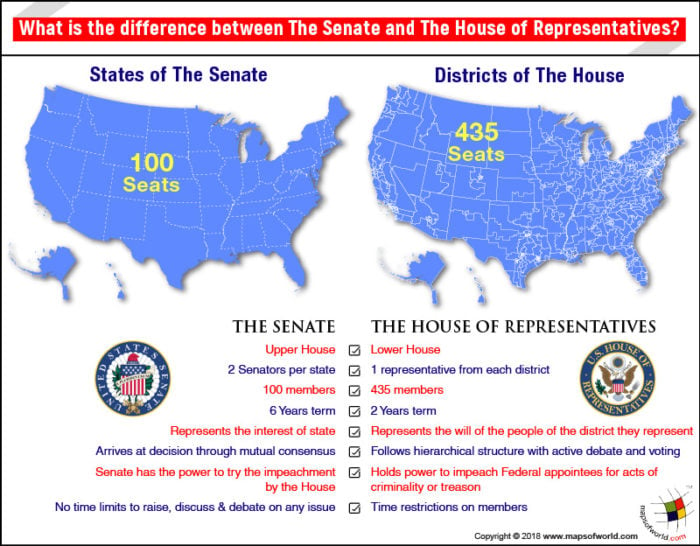
This system of term limits helps to ensure that elected officials remain accountable to the people and that the government remains representative of the people. The U.S. Congress is the legislative branch of the U.S. government. Congressional elections determine who represents your state in the federal government and which political party will hold a majority in each chamber for the next two years. Almost all bills are first referred to a committee, and ordinarily the full House cannot act on a bill until the committee has “reported” it for floor action. There are approximately 20 standing (permanent) committees, organized mainly around major policy areas, each having staffs, budgets, and subcommittees.
Real Estate Law (as of January 1,
Before members are assigned to committees, each committee’s size and the proportion of Republicans to Democrats must be decided by the party leaders. The total number of committee slots allotted to each party is approximately the same as the ratio between majority party and minority party members in the full chamber. The party with a majority of seats in the House is known as the majority party. The speaker, committee chairs, and some other officials are generally from the majority party; they have counterparts (for instance, the "ranking members" of committees) in the minority party. While it's a far-flung possibility, which party has a majority in Pennsylvania's congressional delegation also could have major implications on the presidential race. If the 2024 White House election is contested or tied, each state’s congressional delegation will have a single vote in deciding the winner.

Majority Rules
Power is nowhere concentrated; it is rather deliberately and of set policy scattered amongst many small chiefs. It is divided up, as it were, into forty-seven seigniories, in each of which a Standing Committee is the court-baron and its chairman lord-proprietor. These petty barons, some of them not a little powerful, but none of them within the reach of the full powers of rule, may at will exercise almost despotic sway within their own shires, and may sometimes threaten to convulse even the realm itself. It will be the last such dinner before the 2024 election, giving the president and members of the press a brief respite from the campaign trail as they participate in a Washington ritual designed to celebrate a free press.
As a check to the power of the Speaker and Majority Leader, the Minority Leader, selected from the membership of the political party with fewer seats in the House, serves as an advocate for their party’s concerns and procedural rights. The U.S. House of Representatives is the lower house of Congress and plays a vital role, along with the Senate, in the process of moving proposed legislation to law. The bicameral relationship between the two bodies is vital to the American system of checks and balances that the Founding Fathers of the United States envisioned when writing the U.S. The House of Representatives is part of the Legislative branch of government. So they will not all be up for election at the same time, their terms are staggered. Every two years, during each midterm and presidential election year, a different third of the Senate is elected.
The Constitution also provides for a limit on the amount of debt that the United States government can take on. This limit is referred to as the debt ceiling and it is currently set at $22 trillion. This limit is important in that it prevents the government from taking on too much debt, which could lead to a default on the payments owed to creditors.
His position exemplifies the influence and responsibilities of congressional members. Speaker Kevin McCarthy highlights the time-consuming nature of passing a debt deal through Congress. Despite the urgency of the matter, the legislative process involves various stages and potential obstacles that can significantly delay the final resolution. In Congress, Senate members are elected for a six-year-long term, while members of the House of Representatives are elected for two years. These different term lengths reflect the founders' intentions to balance continuity and responsiveness to shifting public opinion.
This trend raises concerns about the representation of younger generations and the ability of Congress to address evolving societal needs. Equivalently, the governors of Indiana[71] and Oregon[72] are limited to serving 8 out of any 12 years. Conversely, the governors of Montana[73] and Wyoming[74] are limited to two terms, serving 8 out of any 16 years. A member of Congress that has served for more than 40 years may have immense institutional knowledge but may require more thorough education on your issues depending on their policy areas of expertise. However, with a longer tenure comes a more clear record of how they may react to your issues.
Congress has created a wide variety of temporary and permanent commissions to serve as advisory bodies for investigative or policy-related issues, or to carry out administrative, interparliamentary, or commemorative tasks. Such commissions are typically created by either law or House resolution, and may be composed of House members, private citizens, or a mix of both. In some cases, the commissions are entities of the House or Congress itself; in other cases, they are crafted as independent entities within the legislative branch. Prior to the election, the Republican Party had the majority in the U.S. Republicans held 246 seats compared to Democrats' 186 seats, while three seats were vacant. The Republican Party's majority was slightly reduced in 2016, as Democrats picked up six seats.
The most significant role in the House of Representatives is that of speaker of the House. The Constitution empowers the House of Representatives to impeach federal officials for "Treason, Bribery, or other high Crimes and Misdemeanors" and empowers the Senate to try such impeachments. The House may approve "articles of impeachment" by a simple majority vote; however, a two-thirds vote is required for conviction in the Senate. A convicted official is automatically removed from office and may be disqualified from holding future office under the United States. No further punishment is permitted during the impeachment proceedings; however, the party may face criminal penalties in a normal court of law. In the instance when the presidency and both Houses of Congress are controlled by one party, the speaker normally takes a low profile and defers to the president.




No comments:
Post a Comment